


Swagelok's specialty fittings and adapters are designed to solve specific problems

When you are facing or challenging by some specific problem in your fluid system. Before trying to come up with intermix/interchange of components, ask Swagelok we already designed a solutions for you. Find some solutions that Swagelok already fix…
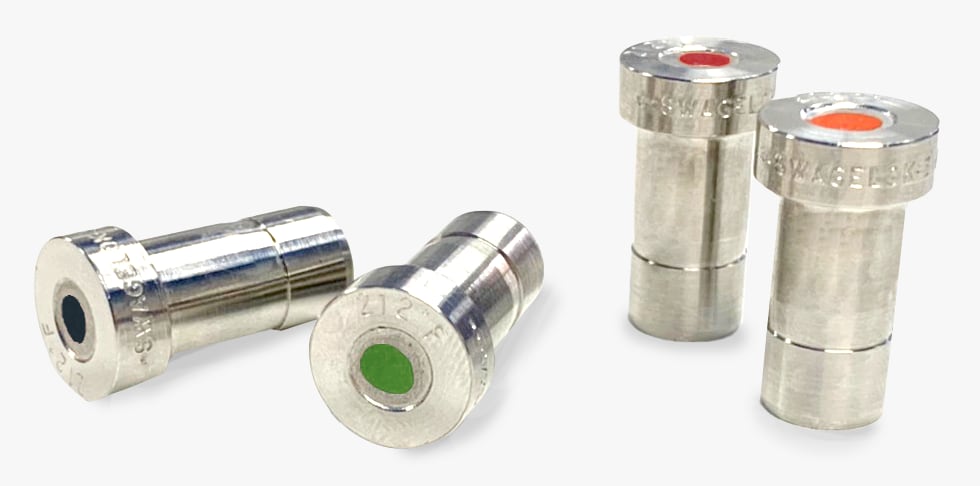
Fusible Tube Adapters
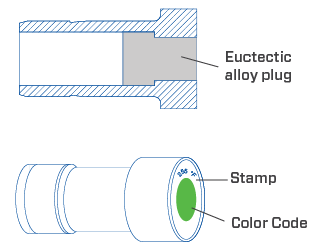
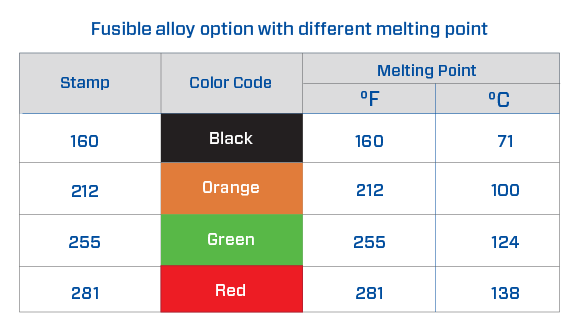
Fusible Tube Adapters are used primarily in fire-suppression systems, these tube adapters have plugs of eutectic alloy that melt at specific temperatures. When the alloy melts, pressure inside the fitting is released into the atmosphere. We've even color coded them: Black 71°C/160°F, Orange 100°C/212°F, Green 124°C/255°F, and Red 138°C/281F°. (see table below)
Mud Daubers
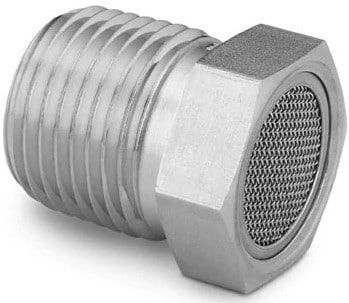
They're officially called Vent Protector Fittings, but most people know them as Mud Daubers, because that's the kind of pest these fittings are designed to thwart. The 40-mesh wire screen keeps insects from crawling in and setting up housekeeping. Likewise, inanimate foreign contaminants stay out. We offer these fittings in both brass and 316 stainless steel. For more information, please see page 32 of our Gaugeable Tube Fittings and Adapter Fittings catalogue.
Dielectric Fittings
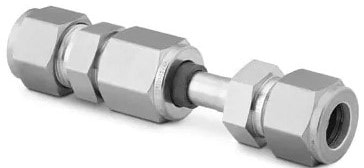
Dielectric Fittings dampen unwanted electrical currents in the system using thermoplastic insulators. Installed on impulse lines ahead of monitoring stations in natural gas pipelines, the fittings interrupt cathodic current flow while permitting full fluid flow. They also can be used to isolate monitoring instruments from the effects of electrical current.
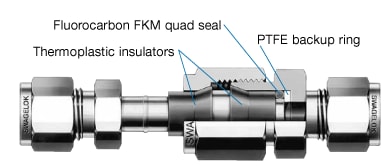
The thermoplastic insulators work over a wide range of operating and climatic conditions. A fluorocarbon FKM quad seal contained in the fitting provides the primary fluid seal.
Transmitter Fittings
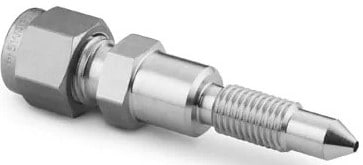
Also known as Calibration Fittings, they connect either temporarily or permanently on the bleed port of a transmitter, allowing the user to calibrate the instrument more efficiently and easily. By measuring pressure, it alerts users of issues before a critical failure may occur.
Orifice Union
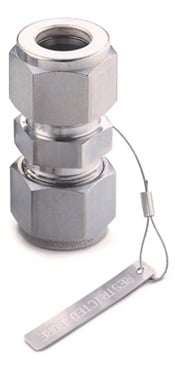
An orifice fitting reduces the flow within a tubing system. Why would you want to do that? One common application is to measure volume within a system.
When you restrict the flow of a pipe with an orifice plate, two things happen. First, the pressure of the media in the pipe reduces immediately following the orifice restriction. Second, the velocity of the media in the pipe increases immediately after the orifice restriction. The relationship between these two effects is proportional to the size of the orifice. Add in viscosity to the equation and you have all the information you need to measure volume on all sizes of piping and tubing. For more information on orifice fittings, please see page 48 of our Gaugeable Tube Fittings and Adapter Fittings catalogue.
Snubber Fittings
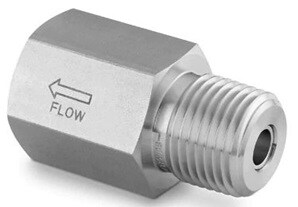
Use a snubber fitting to protect gauges and instruments from pressure shocks, impulses, and surges. Installing a snubber fitting upstream from the gauge reduces the gauge’s response rate and allows the gauge to reach line pressure smoothly. Snubbing, or pressure damping, is accomplished through the use of a porous sintered 316 stainless steel element.
Five basic element options can meet the requirements of fluid applications of light gases, steam, liquids or oils. Anytime you want to solve a challenge with your fluid system, Contact the expert to helping you to solve your problems right through you facilities.
Highlight topics
Cone and Thread or FK Series Compression Tube Fittings
Optimizing Medium-Pressure Oil and Gas Assets With Compression Fittings

Material Selection Guide
No wonder choosing one material isn't easy. In fact, there are many considerations but no worries Swagelok, we can help.

Pitting Corrosion vs. Crevice Corrosion
Learn to identify the differences of the corrosions to avoid and achieve it.