


Ferrule Tube Fitting | Swagelok Double Ferrule Stainless Steel Fittings Thailand
Ferrule Tube Fitting (Swagelok Double Ferrule Tube Fitting)
Swagelok ferrule tube fittings, also known as Double Ferrule Tube Fittings, are precision-engineered stainless steel fittings designed to provide reliable tube grip and leak-tight sealing. Each fitting consists of two ferrules, with distinct functions to ensure safety and performance in fluid and gas systems.
-
Front Ferrule: Provides strong tube grip to secure the tubing and reduce vibration.
-
Back Ferrule: Creates a leak-tight seal to prevent fluid or gas leakage.
The most critical factor in using ferrule tube fittings is proper installation. Swagelok tube fittings must be tightened to the specified number of turns according to installation standards. When correctly assembled, the fitting forms a mechanical seal, delivering high sealing integrity, enhanced safety, and effective tube retention to prevent tube blowout.
Applications of Ferrule Tube Fittings
Stainless steel ferrule tube fittings are widely used across industries where system safety, reliability, and leak prevention are essential, including:
-
Oil & Gas Industry
-
Petrochemical and Refinery Plants
-
Gas Distribution Systems
-
General Industrial Applications
Types of Swagelok Ferrule Tube Fittings
Swagelok offers a comprehensive range of stainless steel ferrule tube fittings to meet diverse application requirements:
-
Swagelok Tube Fittings & Adapters – 316 stainless steel and special alloy fittings
-
Medium Pressure Fittings – Stainless steel fittings designed for high-pressure applications up to 20,000 psig
-
AbT (Assembly by Torque) Fittings – Stainless steel fittings for automotive gas systems
-
Flange Adapters – Connect piping systems to tubing systems
-
Dielectric Fittings – Prevent galvanic corrosion between dissimilar metals
-
Pipe Fittings – Stainless steel fittings for pipe systems
If you are unsure which stainless steel ferrule tube fitting is suitable for your application, Swagelok Thailand is ready to support you. Contact our expert team for professional consultation and product selection to ensure system safety, reliability, and long-term performance.
Find Swagelok Ferrule Fittings here
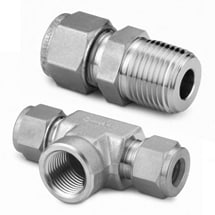
Swagelok® Tube Fittings and Adapters
Reduce leaks and downtime with two-ferrule tube fittings that have leak-tight seals, tube grip, and vibration resistance
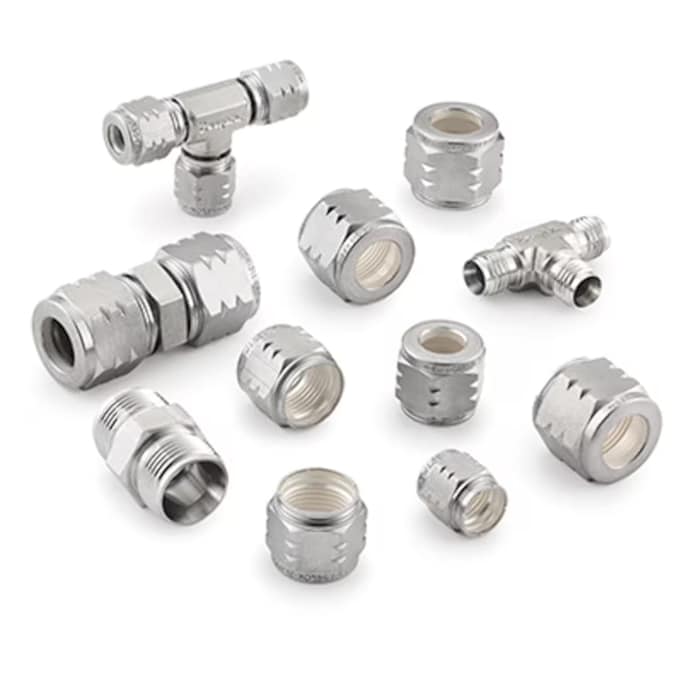
Swagelok® Assembly-by-Torque Fittings (AbT)
Assembly-by-torque (AbT) fittings are designed to meet the advanced and evolving needs of the clean energy industry and support repeatable, high-volume assembly environments
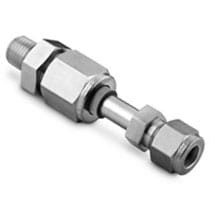
Swagelok® Dielectric Fittings
Swagelok dielectric fittings isolate and protect monitoring instruments from the effects of electrical current while still permitting full fluid flow
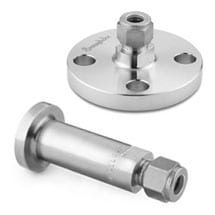
Swagelok® Flange Adapters
Piping flange to Swagelok® tube fitting adapters provide a threadless, weldless transition from flanged piping systems to tubing systems
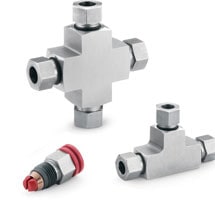
Swagelok® Medium-Pressure Tube Fittings (FK Series)
Swagelok FK series medium-pressure fittings have improved fluid connections in tough applications like oil and gas exploration, R&D systems, and the hydrogen market
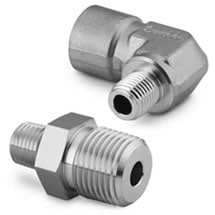
Swagelok® Pipe Fittings
Swagelok® NPT pipe fittings allow for consistent, leak-tight transitions in pipe and tubing systems used in most industrial applications
Swagelok Fittings
Frequently Asked Questions (FAQ) – Swagelok Tube Fitting Installation
For Swagelok Double Ferrule Tube Fittings
1) Question: How do you properly install a Swagelok Tube Fitting?
Answer: Installation procedures can vary between manufacturers because fitting designs differ. For Swagelok double ferrule tube fittings, proper installation generally includes the following steps:
Step 1: Tube Preparation
After cutting the tubing, remove any burrs from the tube end (deburring). A smooth and clean tube end allows the tubing to be fully inserted into the fitting and helps prevent metal particles from entering the system, which could damage sensitive equipment.
Step 2: Insert the Tube Fully to the Shoulder
Insert the tubing into the fitting until it bottoms firmly against the shoulder. A depth gauge can be used to verify proper tube insertion and support installation inspection, ensuring consistent installation practices among technicians.
Step 3: Tighten the Nut the Required Number of Turns
Tighten the fitting nut according to the recommended number of turns. The required turns depend on the type and size of the fitting. Detailed installation instructions can be found in the official Swagelok installation guide.
Step 4: Verify Installation (Inspection)
Use a gap inspection gauge to confirm proper installation. Swagelok tube fittings rely on a mechanical grip and sealing principle. When the nut is tightened to the specified turns, the gap inspection gauge should not fit into the gap between the nut and the fitting body.
If you are interested in improving installation skills for your team or contractors working on-site, training programs are available to help ensure correct and safe installation practices.
Find Swagelok Certified Training Course here!
2) Question: Can fittings and tubing made from different materials be used together?
For example, using 316/316L stainless steel fittings with 6-Mo tubing.
Answer: Yes, in some cases it is possible. However, it is important to verify material compatibility by referring to the Engineering Material Combination (Mix Material) documentation.
Swagelok has conducted extensive testing to confirm compatibility and performance for certain material combinations. Reviewing the engineering guidelines helps ensure proper sealing performance, corrosion resistance, and overall system reliability.